In residential buildings, what is at stake is the safety of the people living there and the value of the property. After an earthquake the question is urgent: is the structure damaged? And in ordinary life a building ages too, with degradation that needs to be understood before it becomes a problem. BBOX 2.0 answers with measured data and a report signed by a structural engineer.
The safety of residents rests on a measurement
Housing complexes, apartment blocks and managed residential portfolios accommodate many people across many units, and uncertainty multiplies by the number of households. Whoever manages the property faces two mirror-image mistakes: letting people back in when conditions do not allow it, or keeping them out longer than necessary.
Continuous structural monitoring allows a rapid assessment of fitness for use after an event and, in ordinary life, keeps the condition of the building under control to protect the asset.
One installation for the aftermath and for long-term control
One hardware setup covers two needs: knowing immediately what the earthquake did and knowing the building over time.
The return home decided on measured data
After the earthquake the data is already available, in the hours when it has to be decided whether households can return.
Accelerations, displacements and interstorey drift available quickly, supporting the fitness-for-use assessment and the decision to return.
An objective reading reduces both the risk of hasty decisions and prolonged waiting without reason.
The ageing of the building under control
Degradation surfaces early, while correcting it is still planned maintenance.
Degradation caught early translates into scheduled work rather than emergencies, with reliable data on the real condition of the building year after year.
A documented technical history of the building, useful in property assessments and in defending its value when it is sold or valued.
A signed report to decide on return and maintenance
MOSI delivers a report interpreted and signed by a structural engineer, in two forms.
The post-event report gives a clear outcome, supporting the fitness-for-use assessment and the decision to return.
The periodic SHM report follows the condition of the building over time and supports the planning of works. For managed portfolios it is also a verifiable record of condition, providing objective evidence when the value of the property has to be defended.
In service on over 2,200 residential units
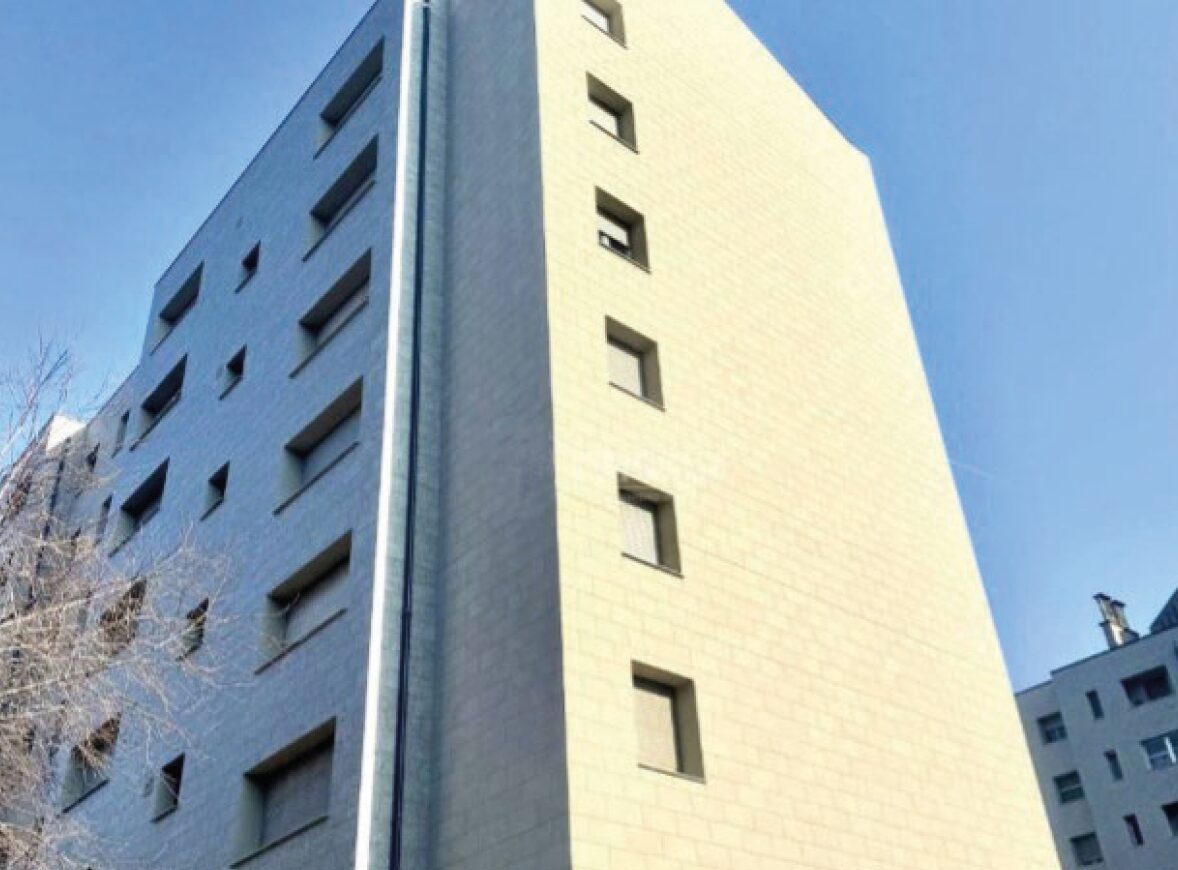
Representative installations include the ALER apartment blocks on via Lazio in Rozzano: a complex upgraded for both energy efficiency and seismic performance, with a dedicated BBOX 2.0 system installed in each block, for a prompt response in the event of an earthquake and a rapid post-event fitness-for-use assessment, protecting both residents and the asset.
Protect your residential portfolio
The MOSI team is available for tailored technical advice.
Request a consultationContinue reading
- How continuous structural monitoring works: SHM and post-event monitoring
- BBOX 2.0: sensors, datalogger and the consultation platform
- BBOX 2.0 installations on buildings, bridges and heritage sites
- Frequently asked questions on structural monitoring
- MOSI Srl: who we are and why we build monitoring systems
- Insights on regulation and the condition of the built environment